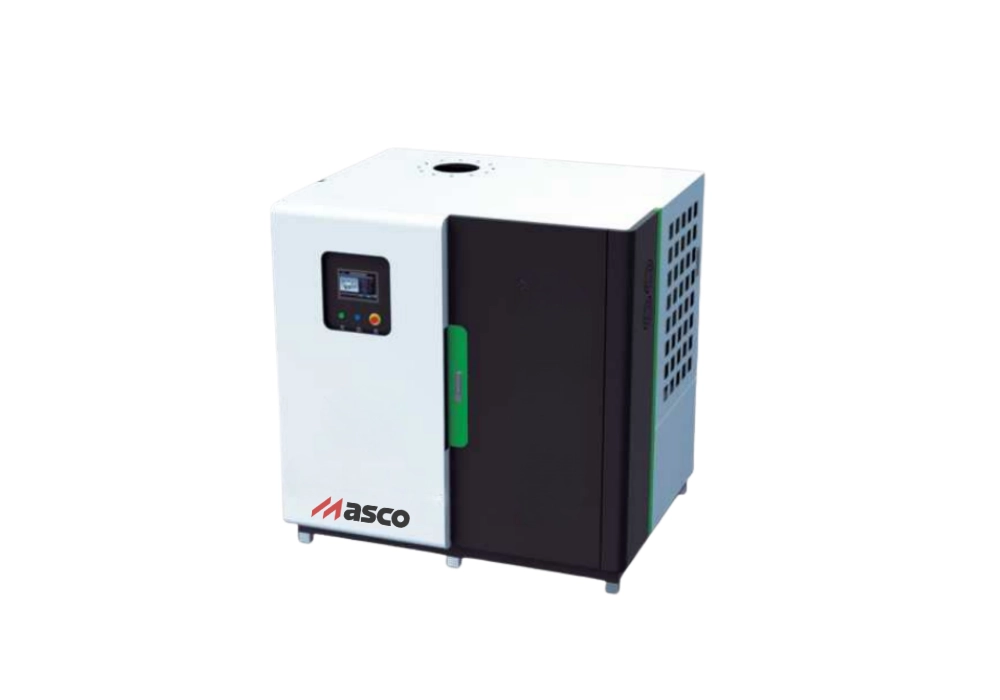
Active Magnetic Bearing (AMB) Blower
Energy savings of over 30% compared to traditional Roots or multi-stage centrifugal blowers.
The Maglev Blower is a highly integrated, energy-saving industrial solution. By utilizing an active magnetic bearing system, the rotor is fully levitated during operation, completely eliminating mechanical friction. Integrating high-speed permanent magnet motors, high-efficiency ternary impellers, and intelligent control systems, it is the premier power source for achieving low-carbon and smart upgrades in industrial processes.
Features and Benefits
- Energy-Efficient: Incorporating a direct-drive permanent magnet motor and tri-dimensional flow impeller technology, it achieves a significant reduction in energy consumption—ranging from 20% to 30%—compared to traditional blowers.
- Environmentally Friendly: Featuring an oil-free, friction-free design and ultra-low operating noise levels, it delivers a clean air supply while allowing for flexible deployment in various office or residential environments.
- Superior Operational Performance: The system requires absolutely no lubrication, and the main unit is maintenance-free; combined with an exceptionally long service life, this significantly reduces long-term operational and maintenance costs, as well as production-related risks.
- Power-Loss Safety: A built-in UPS power system provides real-time protection against power outages, ensuring the equipment can safely decelerate to a smooth, controlled shutdown in the event of a power failure.
- Intelligent Control & Management: Supports remote monitoring, operation, and maintenance capabilities, enabling precise regulation of operational parameters and comprehensive historical data logging.
Core Technologies
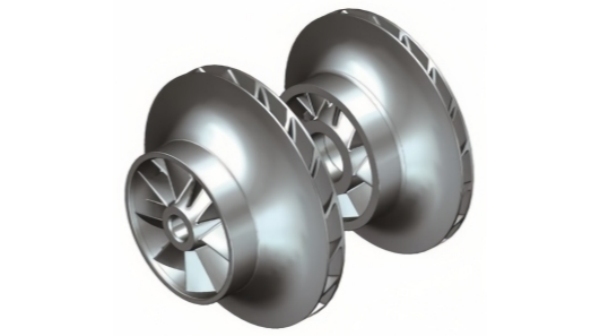
- Aerospace-grade forged materials;
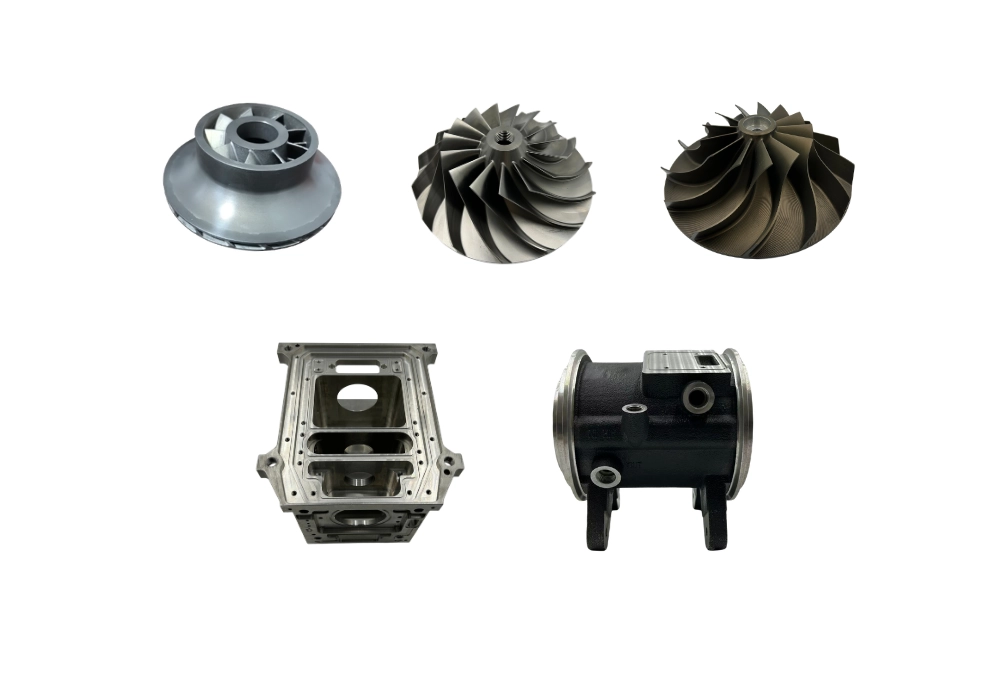
- Precision-milled using a 5-axis machining center;
- Polytropic efficiency reaching up to 97%;
- Unique noise-reduction design;
- 112% overspeed testing and 100% non-destructive flaw detection.
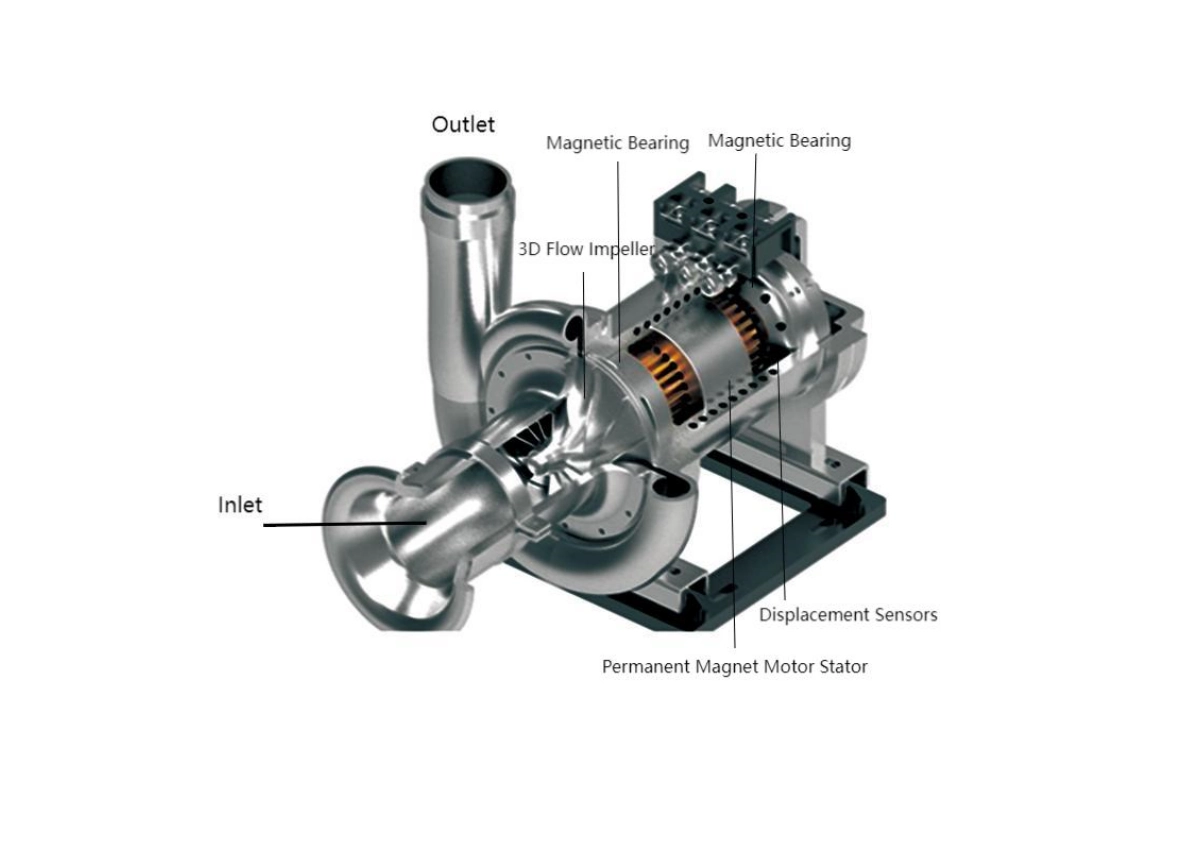
- Utilizes permanent-magnet-biased magnetic bearings, offering lower power consumption and more stable control compared to purely electromagnetic types;
- Active magnetic levitation bearings with 5-degrees-of-freedom control and a signal acquisition rate exceeding 10,000 samples per second;
- High load-bearing capacity, capable of supporting rotor weights up to 2,650 kg, with power consumption of less than 400 W.
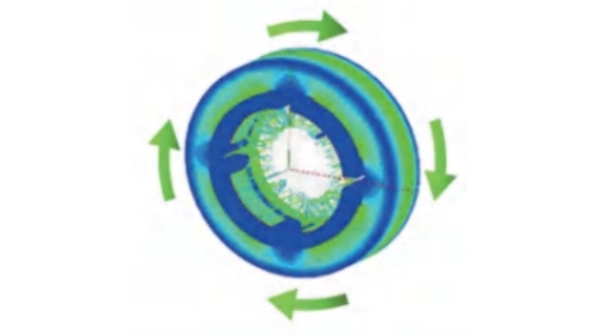
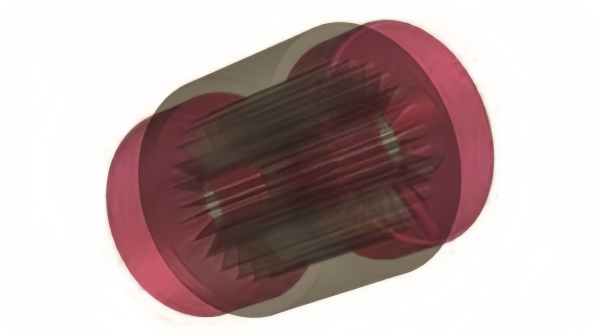
- Direct-drive design, operating at the same speed as the impeller;
- Features low-carrier control, field-weakening control under MTPA (Maximum Torque Per Ampere), and high-speed restart control technologies;
- Motor efficiency reaches up to 98.5%;
- Motor controller efficiency reaches up to 97%.
- Eddy current type;
- Capable of simultaneously detecting rotor shaft displacement in the X, Y, and Z directions;
- Characterized by high precision, rapid response frequency, strong anti-interference capabilities, and high-temperature resistance.
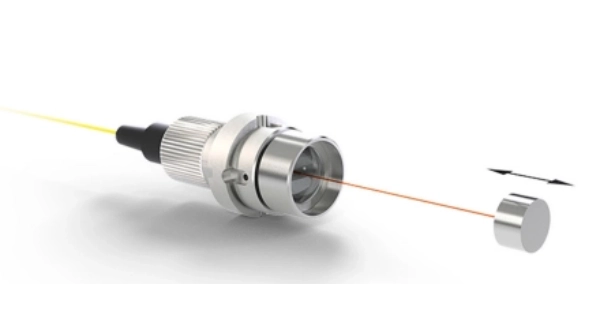
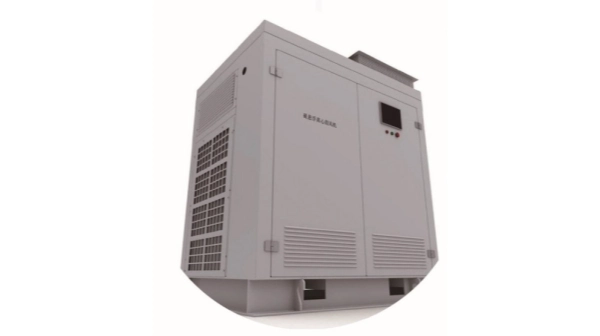
- Features precise aeration control capabilities;
- Incorporates multiple protection functions, including anti-surge and power-failure safeguards;
- Supports various communication protocols and operating modes;
- Enables data recording, storage, transmission, remote monitoring, operation, and maintenance functions, facilitating comprehensive health management throughout the blower's entire lifecycle.
Working Principle
The blower's permanent magnet synchronous motor drives a three-dimensional flow impeller to rotate at high speed. As the impeller spins rapidly, the gas within it rotates in tandem and is flung outward under the influence of centrifugal force; subsequently, it undergoes diffusion within the volute casing to form pressurized gas. Simultaneously, a vacuum zone is created at the impeller inlet, allowing fresh external gas to continuously flow into the impeller, thereby establishing a continuous flow of gas.
Blower Parameter Table (CF Series)
| Product Model | CF-37A | CF-50A | CF-75A | CF-90A | CF-110A | CF-132A | CF-160A | CF-200A | CF-250W | CF-300W |
| Discharge Pressure (KPa):Flow Rate Unit: Nm³/min (at 1 standard atmosphere, 20°C) | ||||||||||
| 50 | 38 | 51 | 77 | 92 | 112 | 135 | 164 | 205 | 256 | 308 |
| 60 | 34 | 46 | 70 | 84 | 102 | 123 | 148 | 186 | 232 | 279 |
| 70 | 30 | 41 | 62 | 75 | 91 | 109 | 132 | 166 | 207 | 249 |
| 80 | 28 | 38 | 57 | 69 | 84 | 101 | 122 | 153 | 191 | 230 |
| 90 | 25 | 34 | 52 | 63 | 76 | 92 | 111 | 139 | 174 | 209 |
| 100 | 24 | 32 | 48 | 58 | 71 | 86 | 104 | 130 | 162 | 195 |
Magnetic Levitation Blower vs. Air-Bearing Blower
| Feature | Air Bearing Blower | Maglev Blower |
| Start/Stop Cycles | Limited: Friction occurs at low speeds; coating wears out, leading to rotor seizure. | Unlimited: Levitation before rotation; remains levitated until static. |
| Cleanliness | High: Micro-level (μm) gap requirements. | Lower: Millimeter-level (mm) gap between rotor/stator. |
| Load Capacity | Small: Max system power ~200kW. | Large: Power up to 1000kW+; rotor weight up to 2650kg. |
Comparison: Maglev Blower vs. Traditional Blowers
| Performance Comparison | Roots Blower | Single-Stage Centrifugal High-Speed Blower | Maglev Blower |
| Bearing | Contact Bearing | Contact Bearing | Non-contact Bearing |
| Lubrication System | Yes | Yes | None |
| Mechanical Loss | 3.5% of Shaft Power | 3.5% of Shaft Power | 100W Shaft Power |
| Mechanical Vibration | Large | Large | Small |
| Impeller Structure | Screw Rotor | Ternary Flow Centrifugal | Ternary Flow Centrifugal |
| Compression Form | Positive Displacement | Velocity Type | Velocity Type |
| Rotor Speed | Low Speed | High Speed | High Speed |
| Aerodynamic Efficiency | Low | High | High |
| Motor Speed | Low Speed | Low Speed (Requires Gearbox) | High Speed, Direct Drive |
| Motor Efficiency | 85% | 90% | 98% |
| Speed Regulation | External Purchase Required (Efficiency drops sharply after regulation) | External Purchase Required (Efficiency drops sharply after regulation) | Built-in / Self-contained |
| Footprint / Volume | Large | Medium | Small |
| Transmission | Belt (3% Loss) | Speed-increasing Gearbox (2% Loss) | Direct Drive (Zero Loss) |
| Lubricating Oil | Regular Inspection & Replacement | Regular Inspection & Replacement | None |
| Wear Parts | Bearings, Seals, Lubrication Station | Bearings, Seals, Lubrication Station | None |
| Maintenance Cost | High | High | Low |
| Overall Efficiency | 55% | 65% | 75% |
| Operating Cost | High | High | Low |
| Noise Level | High, >100dB | Medium, >90dB | Low, <80dB |